What is Magnetron Sputtering Window Film?
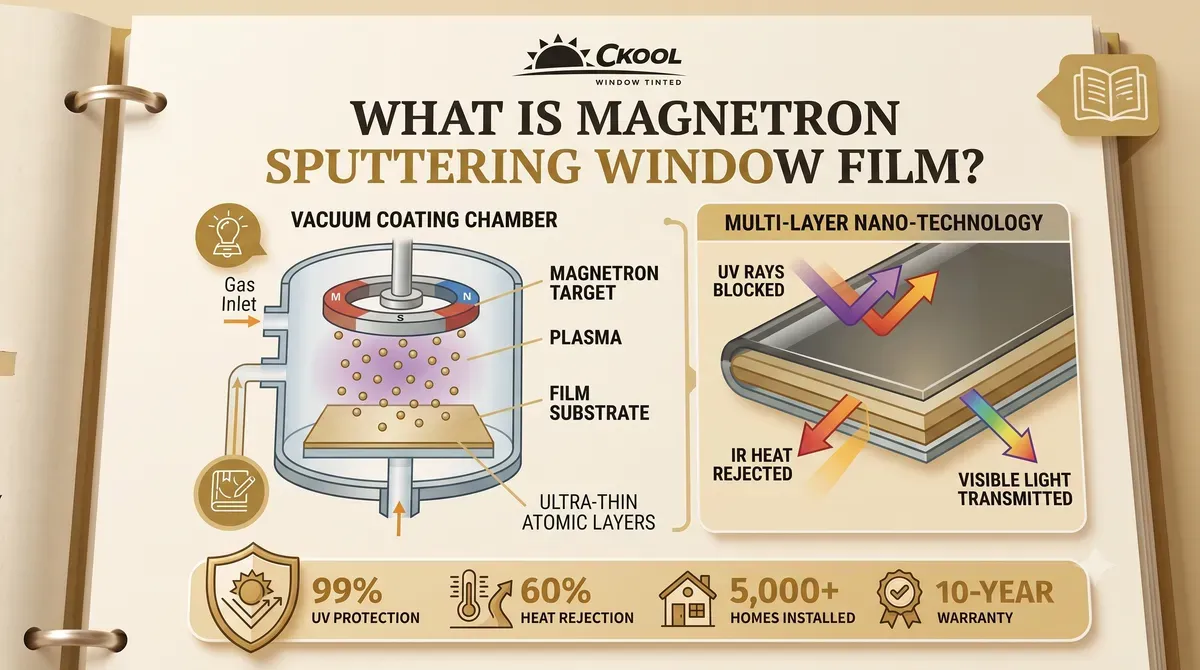
TL;DR: Magnetron sputtering is an advanced deposition process that uses magnetic fields to evenly coat window film with atomic metal layers. Compared to standard thermal sputtering, magnetron sputtered films offer superior optical clarity, more precise heat rejection specs, and minimal reflective haze, as seen in premium series like XHD window films.
What is magnetron sputtering film?
Magnetron sputtering film is an architectural window laminate manufactured by utilizing magnetically assisted plasma to deposit ultra-thin, uniform layers of metallic alloy particles onto a polyester substrate. This precision coating method creates a high-performance heat barrier without the thick, mirror-like reflectivity of traditional metallic tints.
Why magnetron sputtering outperforms traditional coating
Standard evaporation or thermal sputtering processes result in uneven metal distributions that create distorted views and high interior reflection. Magnetron sputtering controls target molecules precisely, yielding higher performance.
Atomic-Level Precision
The magnetic fields align ionized gas particles to deposit metals like gold, silver, or bronze molecule by molecule, maintaining highly consistent film thickness.
Low Visual Reflectance
By keeping metal layers thin, magnetron sputtered films reflect heat-producing infrared energy while keeping visible light reflections close to normal glass levels.
Comparing magnetron sputtering, standard sputtering, and XHD technology
Standard Sputter Tint
Standard sputtered film relies on simple gas discharge to knock metal particles onto the film base. While more durable than dyed films, standard sputter coatings have thicker metal layers that create a mirror-like appearance. This mirror finish can create glare and block cellular signal transmission inside buildings.
Magnetron Sputtering Film
Magnetron sputtering adds strong magnets behind the metal target source to concentrate gas ions. This creates a dense, microscopic metal layer that provides high heat rejection and durability with very low interior reflection, resolving the shiny, mirror-like look of older metal tints.
XHD Window Film (Extra High Definition)
XHD window film represents a premium class of window tint that combines magnetron sputtering with ultra-pure ceramic matrices. XHD films selectively filter solar wavelengths, achieving up to 95% infrared rejection (IRR) while maintaining optical clarity. This prevents the yellow haze or hazy night views associated with standard tints.
Technical specifications compared by coating type
Compare the optical and heat rejection characteristics of different metal and ceramic deposition technologies.
| Technology Class | Total Solar Rejected (TSER) | Average IRR % | Visible Reflection (Interior) | Optical Clarity Rating |
|---|---|---|---|---|
| XHD Ceramic-Sputter | 65% - 78% | 95% - 99% | 8% - 12% (Low) | Extra High Definition |
| Magnetron Sputtered | 55% - 70% | 80% - 92% | 12% - 15% (Moderate) | Excellent |
| Standard Sputtered | 50% - 62% | 70% - 85% | 18% - 25% (High Mirror) | Good |
| Traditional Reflective | 45% - 55% | 60% - 75% | 25% - 35% (Very Shiny) | Fair |
Practical steps to check for magnetron sputtering films
- Examine glass reflection levels: Hold a phone screen against the glass; magnetron sputtered films reflect light naturally without a heavy, silver mirror finish.
- Look for alloy composition details: Authentic datasheets will list the sputtered elements, such as nickel, chromium, or ceramic compounds.
- Check high-angle visibility: View the film from a side angle. Superior magnetron sputtering avoids the rainbow patterns common in cheaper metal films.
- Verify manufacturer warranty specs: Ensure the warranty covers oxidation or bubbling, which are common issues when sputtered layers are exposed to air.
Common mistakes when choosing sputtered films
- Assuming all sputtered films have metal sheens: Magnetron sputtering deposits alloys in layers thin enough to reject heat without creating a mirror look.
- Ignoring potential GPS or Wi-Fi signal drop: Heavy metal coatings can block wireless signals. Ceramic-sputter films like the XHD series use ceramic matrices to prevent signal loss.
- Choosing shiny architectural films for residential areas: High exterior reflection can create mirror glare that disturbs neighbors and blocks evening views from inside.
Frequently asked questions about magnetron sputtering films
Q: What is the main benefit of magnetron sputtering window film?
It deposits microscopic alloy layers evenly onto the film, delivering high heat rejection and durability with very low interior reflection, avoiding the shiny mirror look of traditional metal tints.
Q: Does magnetron sputtering block cell phone signals?
While heavy metallic films can block signals, advanced ceramic-sputtered films like the XHD series use non-conductive materials to prevent cellular and Wi-Fi interference.
Q: What is XHD window film?
XHD (Extra High Definition) window film combines magnetron sputtering with ceramic particles to deliver high heat rejection (up to 95% IRR) and excellent optical clarity without color distortion or night haze.
Q: How do you identify magnetron sputtering vs standard sputtering?
Magnetron sputtering offers higher clarity, less interior reflection, and avoids the rainbow haze or shiny mirror appearance typical of standard sputtered coatings.
Q: Are sputtered films suitable for double-pane windows?
Yes, but you must select double-pane compatible sputtered films. Applying highly reflective or absorbing films can trap heat in the airspace, increasing glass crack risks.
Conclusion
Magnetron sputtering represents a significant step forward from standard sputtered tints, offering high heat rejection without a shiny, mirror-like appearance. For residential buildings, choosing advanced options like XHD ceramic-sputter films ensures excellent optical clarity and durability. Be sure to check the total solar energy rejected (TSER), interior reflection levels, and select certified brands to get a window film that lasts.