How Long Does Window Film Last in Malaysia's Weather?
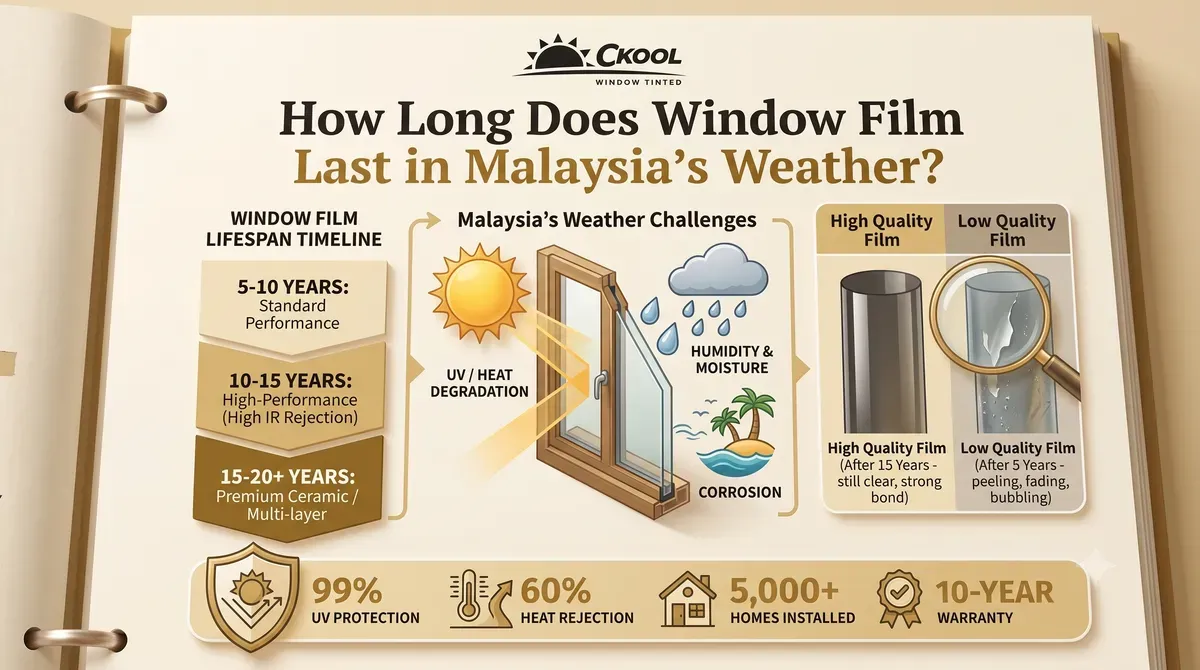
TL;DR: High-quality home tints last 10 to 15 years in Malaysia. Premium nano-ceramic and sputtered films handle intense heat and humidity without fading. Cheap dyed options usually degrade, bubble, or turn purple within 2 to 3 years.
What window film durability means in the tropics
In tropical countries, window film durability simply means how well the polyester layers can block heat and UV rays, stay stuck to the glass, and remain clear over the years. Because Malaysia sits close to the equator, windows face relentless sun and heat. Under these conditions, the specific materials used to make the tint determine how long it will last.
Why our tropical climate ruins cheap tints
With average daytime temperatures around 32°C and humidity levels often topping 80%, Malaysia has some of the harshest weather in the world for window films.
Relentless UV exposure
Intense ultraviolet radiation breaks down the adhesives and binders in cheaper tints. This is what causes them to peel off, bubble up, or turn purple.
Constant expansion and contraction
As the sun heats the windows and they cool down at night, the glass and the film expand and shrink at different rates. High-quality adhesives absorb this constant shifting; cheap ones fail and crack.
How different types of film last in practice
The chemistry and manufacturing methods behind each film type dictate how many years of protection you will get.
Nano-ceramic film
These tints use inorganic ceramic nanoparticles rather than dyes or metals. Since inorganic materials are highly stable and do not break down in sunlight, nano-ceramic films keep their heat blocking performance and original shade for 10 to 15 years in Malaysia.
Sputtered film
Sputtering binds individual metal atoms directly to the polyester layer. This creates a highly durable shield that reflects solar heat away. Sputtered film easily lasts 10 to 12 years without fading or losing its heat rejection properties.
Reflective (metallized) film
These films rely on a very thin, reflective metal layer. They usually last 8 to 10 years. Over time, high humidity can seep into the edges and cause the shiny silver finish to oxidize and discolor.
Carbon film
Carbon films use carbon particles to catch infrared rays. They do not fade to purple and generally perform well for 7 to 10 years, though they do not block quite as much heat as newer ceramic materials.
Dyed film
Dyed tints rely on organic colors that absorb heat rather than reflecting it. Under the intense Malaysian sun, these organic dyes break down quickly. Within 2 to 3 years, dyed film turns purple, fills with bubbles, and stops blocking heat.
Comparison of window film lifespans in Malaysia
Compare the expected lifespan, heat stability, and typical degradation signs of different film types under hot and humid tropical conditions.
| Film Type | Expected Lifespan | UV Resistance | Adhesive Durability | Common Sign of Age |
|---|---|---|---|---|
| Nano-Ceramic | 10 - 15 Years | Excellent (Stable) | High Stability | Slight edge peeling (late life) |
| Sputtered | 10 - 12 Years | Very Good | High Stability | Minor edge corrosion |
| Reflective (Metalized) | 8 - 10 Years | Good | Moderate | Oxidization spots |
| Carbon | 7 - 10 Years | Good | Moderate | Loss of dark contrast |
| Dyed | 2 - 3 Years | Poor (Fades) | Low (Bubbles easily) | Fading to purple, bubbling |
How to make your window film last longer
- Give it time to dry: Let the film cure for 7 to 10 days after installation. Do not wash the windows or open them during this period.
- Use clean microfiber cloths: Wipe the glass with clean, soft microfibers. Rough rags or dirty cloths can drag dust across the tint and scratch the protective coating.
- Avoid ammonia cleaners: Ammonia degrades the polyester binders and glue. Use mild dish soap or cleaners designed specifically for tinted windows.
- Hire professional installers: Proper surface prep removes the tiny specks of dust and trapped moisture that cause edges to peel early.
Mistakes that ruin window tint early
- Scrubbing with rough squeegees or newspapers: Rough materials scratch the protective layer, leaving behind hazy lines that blur your view.
- Washing the glass right away: Wiping down damp windows disrupts the drying process and turns temporary water pockets into permanent bubbles.
- Spraying high-pressure water at the edges: Hard blasts of water can force moisture under the sides of the film and lift it off the glass.
Frequently asked questions about film durability in Malaysia
Q: Why does cheap window film turn purple?
Cheap dyed films use organic dyes that break down under solar radiation. The yellow and red colors break down first, leaving only the blue and purple tones.
Q: How do I know when to replace my window film?
You will notice rooms getting hotter, visible bubbles, a purple tint, or a hazy look that does not wash off.
Q: Does humidity make home window film peel off?
Not if the installation uses high quality adhesives. Premium films have moisture-resistant acrylic adhesives that handle humidity without peeling.
Q: Can bubbles show up years after installation?
Yes. If the adhesive fails due to constant heat or poor materials, the film separates from the glass, creating air pockets.
Q: Is a window film warranty worth it?
Yes. Under the intense Malaysian sun, a 5 to 10 year warranty that covers bubbling, peeling, cracking, and fading is important protection for your purchase.
Summary
The Malaysian sun and humidity quickly ruin low-grade window films. While dyed films fail within a few years, premium inorganic nano-ceramic or sputtered films keep your home cool for up to 15 years. Just remember to use ammonia-free cleaning solutions and hire professional installers who back their work with a solid warranty.