Advanced Window Film Technology: A Complete Comparison Guide
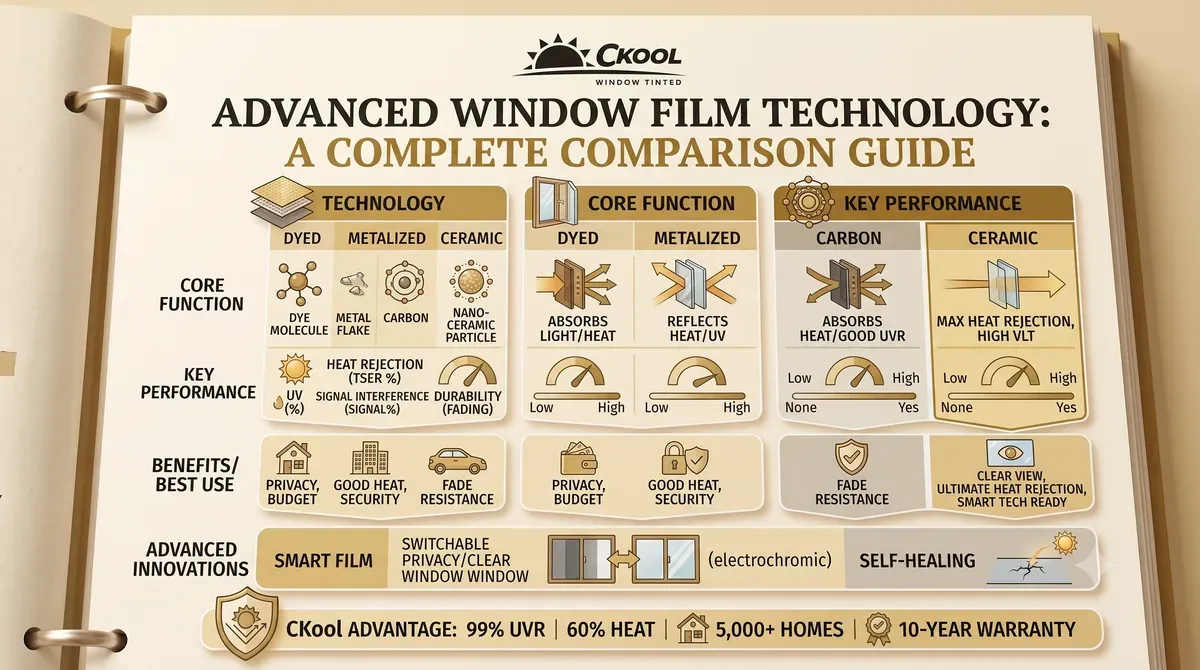
TL;DR: Comparing advanced solar films requires matching window insulation goals with the correct material technology. While ceramic and titanium nitride films absorb heat without blocking signals, sputtered films offer higher solar heat gain coefficient (SHGC) reduction by reflecting energy. For safety, anti-shatter security films prevent injuries from glass breakage, while low-E films are ideal for year-round temperature control in seasonal climates.
What is advanced window film technology?
Advanced window film technology is the application of multi-layered polyester coatings infused with metallic, ceramic, or chemical agents to alter the thermal and mechanical characteristics of architectural glass. Modern films are designed to selectively filter light, strengthen glass, and manage heat transfers based on molecular structures.
Why choosing the correct film class matters
Selecting the right window film is a balance of heat rejection, light levels, safety, and brand reliability. Understanding specialized options helps you avoid underperforming materials and select the right film for your home or commercial building.
Solar Energy Rejection
Advanced coatings are engineered to reduce solar heat gain without altering the visual appearance of your windows, allowing clear views while blocking invisible infrared and UV wavelengths.
Building Safety & Protection
Security-enhanced films hold glass sheets together during impacts, protecting building occupants from windblown shards and deterring forced entry.
Comparing key window film technologies
Nano Ceramic Window Film vs Sputter Tint
When deciding on a nano ceramic window film vs sputter tint, the choice is between heat absorption and heat reflection. Nano-ceramic films absorb infrared wavelengths to block heat without reflecting light, preserving a natural, non-reflective view. Sputtered tints use metal atoms to reflect heat, providing high durability but often introducing a slight silver sheen that can interfere with wireless signals.
Low-E Window Film for Heat Retention
While most films focus purely on keeping heat out, applying a low-e window film for heat retention helps balance indoor temperatures in cold seasons. Low-emissivity (low-E) films reflect indoor radiant heat back into the room, reducing heating bills in winter while still blocking solar heat in the summer.
Spectrally Selective Window Film Reviews
Looking at spectrally selective window film reviews shows how these films filter specific solar wavelengths. By blocking heat-carrying infrared and UV light while letting in visible light, they protect interiors from sun damage without reducing indoor brightness.
Anti Shatter Security Window Film for Buildings
Installing anti shatter security window film for buildings provides essential protection against glass breakage. These thick polyester films use strong adhesives to hold glass fragments together in the event of an impact, storm, or break-in, reducing the risk of flying glass injuries.
Local Brand vs International Brand
Choosing a local brand vs international brand often involves balancing budget with long-term reliability. International brands are backed by standardized certifications and multi-decade global warranties. Local brands can be more affordable and offer quicker local installation support.
Performance metrics and technology comparisons
Compare shgc reduction window film options (Solar Heat Gain Coefficient) and other specifications to find the right balance of heat rejection, safety, and visibility.
| Technology Type | Total solar rejected | Typical IRR | Visible Light (VLT) | Signal Interference |
|---|---|---|---|---|
| Nano-Ceramic | High (35% - 50%) | 90% - 99% | High (30% - 70%) | None |
| Sputtered Metal | High (40% - 55%) | 80% - 90% | Medium (20% - 50%) | Low to Moderate |
| Low-E (Insulating) | Moderate (25% - 40%) | 70% - 80% | High (50% - 75%) | None |
| Anti-Shatter Security | Variable (15% - 45%) | 30% - 80% | Custom (15% - 80%) | None (unless metalized) |
Practical steps to select advanced window films
- Assess local sunlight conditions: Homes in hot areas benefit most from ceramic or sputtered films with high SHGC reduction properties.
- Consider safety needs: If you are tinting shopfronts or ground-floor glass, prioritize anti-shatter security films.
- Verify brand certifications: Check if the manufacturer carries certified, international testing badges to verify performance specifications.
- Request physical samples: Test different VLT film samples against your windows to verify light levels and reflections.
Common mistakes when choosing advanced window films
- Using non-ceramic metal films near Wi-Fi routers: Standard metal sputtered films can block wireless signals, weakening cellular and internet connections.
- Skipping glass compatibility checks for Low-E films: Applying Low-E films to incompatible double-pane windows can trap heat, increasing the risk of thermal stress fractures.
- Failing to confirm security film thickness: Security films must be at least 4 mil thick to provide real impact resistance and shatter protection.
Frequently asked questions about advanced solar films
Q: What is the main difference between nano ceramic film and sputter tint?
Nano-ceramic film absorbs heat to block solar energy without creating reflections or blocking cellular signals. Sputtered tint uses microscopic metal particles to reflect heat, providing high durability but introducing a reflective sheen.
Q: How does Low-E window film help with heat retention?
Low-emissivity (Low-E) window film features specialized coatings that reflect indoor radiant heat back into the living space, reducing winter heating costs while blocking solar heat during summer.
Q: Why are spectrally selective window films highly rated in reviews?
Reviews praise spectrally selective films because they selectively filter out heat-carrying infrared and UV wavelengths while letting in natural daylight, preventing rooms from feeling dark.
Q: How does anti-shatter security film protect buildings?
Anti-shatter security film uses strong adhesives and thick polyester layers to hold glass fragments together during impacts, reducing injuries and preventing forced entry.
Conclusion
Choosing the right advanced window film comes down to matching your budget with the exact specs of your windows. While sputtered metal films offer excellent heat reflection, nano-ceramic films provide signal compatibility and clear views. Be sure to check TSER ratings, glass compatibility, and choose verified brands to get a window film that lasts.